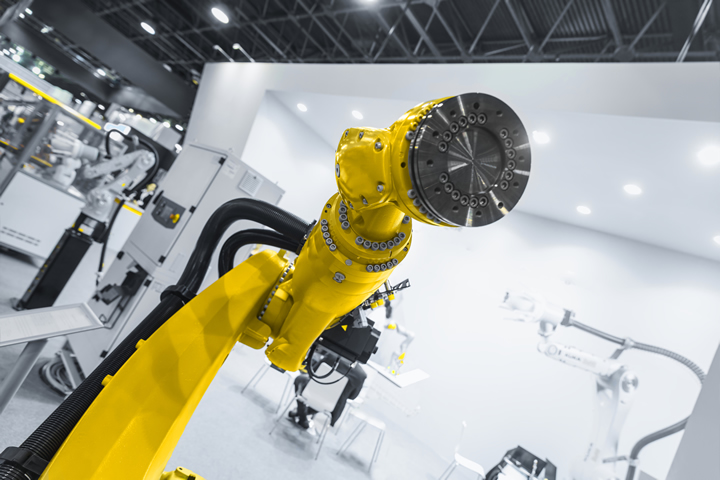
Why Manufacturing AI Depends on Secure Data Movement

Like many industries looking to leverage AI effectively, manufacturers are increasingly using AI agents to support new product development initiatives and balance competing objectives.

The Next Supply Chain Advantage Is Orchestration, Not Just Execution

Too often, resilience is treated like a vague aspiration or just another metric on a dashboard. In reality, it is a business capability. A resilient supply chain is one that can continue supporting customers and revenue even when conditions change.

How AI and Global Disruption are Influencing Where and How Manufacturers are Investing?

Manufacturers are buying certainty. When demand is hard to forecast and supply is hard to guarantee, they use acquisitions and minority investments to lock in capacity, critical inputs, and know-how, especially in sectors tied to defense, transport, and advanced electronics.

How Hardware Program Managers can Successfully Scale Innovative Technologies

It becomes critical for program managers to architect the execution system end-to-end, accounting for technical development, cross-functional dependencies, supply chain, manufacturing, and change management.

Robotic MIG vs. Laser Welding for High-Speed Lightweight Component Assembly

Teams must learn where they function most optimally to produce a build with structural integrity that keeps the assembly lightweight and easy to handle. Workforces must view every project with nuance rather than using a single method as a blanket standard.

How Reshoring Industries Are Driving Advanced Manufacturing Standards

For reshoring industries, the real shift starts after the ribbon cutting — domestic plants must deliver consistent quality, full traceability and reliable output with fewer people.

Cloud vs. On-Prem? Manufacturers Are Asking the Wrong Question

For manufacturers, the real question isn't which environment to choose; it's how to combine both in a way that actually works on the shop floor. Increasingly, hybrid architectures are emerging as the practical answer.

Managing Materials in the Face of Import Tariffs - What Now?"

No matter what trade policies are ultimately put in place, a strategic and proactive approach to materials management will leave your business stronger and better prepared for whatever comes next.

From Machines to Monetization Systems: Why Industrial Software Revenue Fails Without Control

Industrial software can deliver ongoing value, but this cannot happen until control has been established, either by protecting revenue from loss (revenue retention) or by driving the growth of new revenue streams.

How Software Upgrades Are Reshaping Configurable Products

A practical goal is to ensure the organization can answer, quickly and consistently, "What do we have in the field, and what can we safely change?" Manufacturers that win won't just ship configurable products; they'll ship maintainable, upgradeable configurations at scale.

How Thoughtful UX Accelerates Decision Making in Industrial Systems

Mission-critical environments demand interfaces that perform under stress. In utilities, energy, and manufacturing, seconds matter when incidents occur. Software must support rapid recognition and response, not prolonged analysis.

How to Scale Configuration Complexity Without Eroding Margins

Customization drives growth. But as configurability expands, many manufacturers face a familiar pattern: greater product variety paired with margin erosion, operational instability, and discount pressure.

A Practical Guide to Using AI for Demand Sensing

By moving from backward-looking statistics to forward-looking AI, small changes throughout the supply chain (and the signals they send) can be detected, analyzed, and neutralized before they create widespread disruption.

Planning a Facility Expansion? Here's How to Improve Reliability and Uptime at the Same Time

For modern manufacturers, success entails embedding reliability into the literal foundation of the building. Therefore, expanding operations requires adopting a smart manufacturing strategy from day one.

Material Handling in Manufacturing Is Predicted to Change in These 5 Ways in 2026

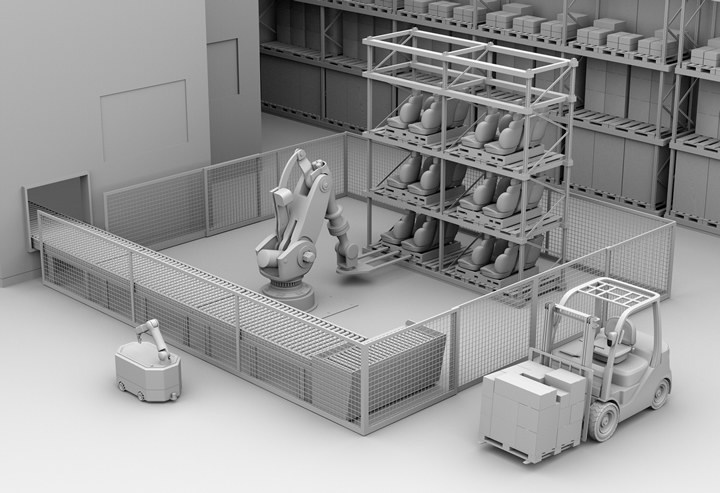
2026 is the year manufacturer-owned and -operated warehouses become more autonomous, modular and sustainable. These trends should accelerate upskilling and reskilling, ensuring that well-trained workers remain gainfully employed amid ongoing innovation.

Records 16 to 30 of 1327

First | Previous | Next | Last

Featured Product
Datanomix Production Monitoring

Datanomix Production Monitoring

Datanomix Production Monitoring delivers instant visibility into your shop floor performance. Through real-time alerts, simple machine connectivity, and our kick-ass coaching, you'll catch inefficiencies early, align your team with meaningful metrics, and respond faster to issues before they escalate. The software adapts without operator input and works out of the box with purpose-built Tracks (Efficiency, Delivery, Tooling, and more). Production Monitoring arms you with the data to make more, waste less, and lead with confidence. And while real-time visibility keeps you sharp in the moment, historical insights ensure you're learning from the past to drive ongoing continuous improvement.

Manufacturing and Automation - Featured Company

MRPeasy

MRPeasy

MRPeasy is a seriously powerful and easy to use ERP software for small manufacturers that gives you everything you need to manage your manufacturing and distribution processes. Integrating sales, procurement, inventory, production, finances, and your team, it provides you with an accurate real-time overview of your operations. MRPeasy is trusted by 2200+ small manufacturers worldwide, 900+ of which are based in the US and Canada. Our users report a 54% average improvement in the overall performance of their business and a 42% increase in on-time deliveries. Try for free, no credit card needed.