
Manufacturing Asset Monetization: What It Is and How It's Done
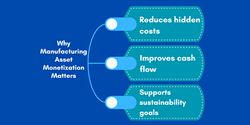
This article will explain what manufacturing asset monetization is, outline the main methods companies use, and walk through the process step by step.
The 'Halo Effect' of Manufacturing Facility Location: Why Smart Manufacturers Are Choosing Locations Near Complementary Businesses
.jpg)
This strategy is not about simple convenience; it's about creating a powerful, mutually reinforcing "halo effect" of shared success, instant market credibility, and profound operational synergy across engineering, tooling, fabrication, and logistics networks.
Why Economic Uncertainty Demands a Real-Time Manufacturing Strategy
.jpg)
Proactive manufacturers now treat economic uncertainty not as isolated incidents, but as ongoing tests of their operational readiness and digital maturity.
The Next Industrial Epoch is Here: Why Acting Now is a Strategic Imperative for Manufacturers
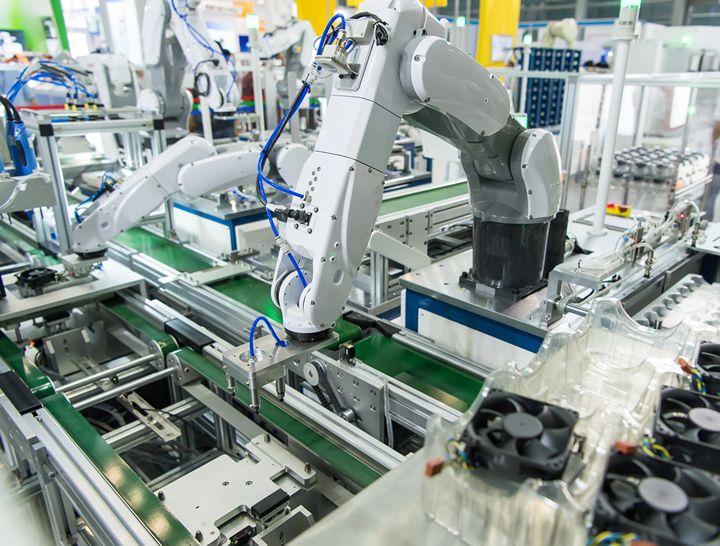
The convergence of technological maturity, proven financial returns, and a strategic need for resilient domestic production has created a generational opportunity, and the window to act is now.
How to Employ AI in Manufacturing Sales

AI agents can help ensure every interaction across every channel contributes to a single, intelligent sales motion, including always-on gathering insights like on which SKUs are trending to develop and implement real-time optimizations.
"Building for the Surge: How to Prepare Your Factory Storage for Times of Peak Demand"
.jpg)
To truly manage seasonal peaks efficiently and safely, facilities need a storage infrastructure designed to flex with changes in demand, regardless of whether they're seasonal, planned, or one-time occurrences.
What is the process approach?
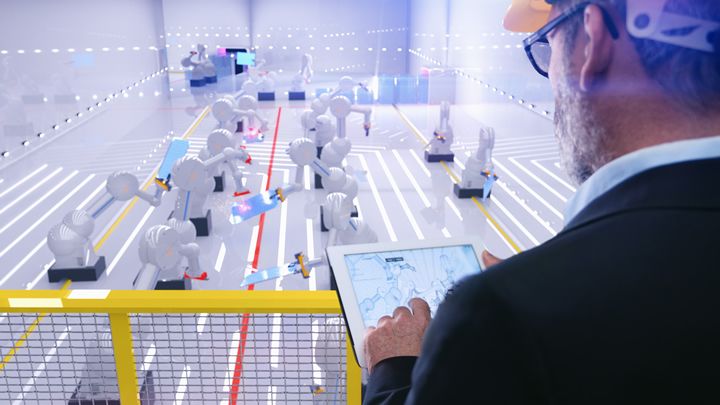
The process approach is a way of thinking about work: modeling it, improving it, and correcting errors. The reason everyone uses it is that it works. Describing your work as a process makes you more effective in many contexts.
6 Steps to Build a Continuous Improvement Culture in American SMEs
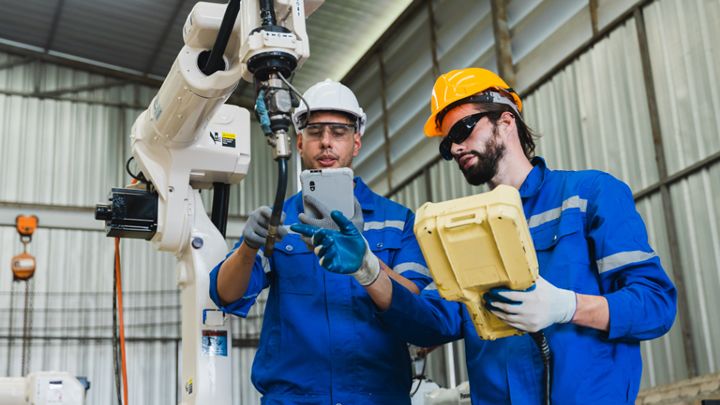
This blog outlines 5 practical, proven steps that leaders in American SMEs can use to build a culture where improvement isn't a project-it's just how work gets done.
How B2B IAM Can Make or Break Manufacturers' Partner Relationships
.jpg)
In manufacturing, your partner's access is your risk. And in too many cases, it's your liability. This can be applied to the responsibilities between manufacturing partners and plays out in identity and access management (IAM).
Winning More Business with Smarter Marketing

Without a strong leadership link between strategic plans and marketing, it's easy for tactical marketing results to stagnate, opportunities to diminish and customer relations to dip.
5 Signs it's Time to Hire a Fractional CFO
.jpg)
For many small to mid-sized manufacturers, hiring a full-time CFO isn't economically feasible. That's where a fractional CFO-a part-time, high-level financial expert-can step in to transform the business.
Top 4 Complaint Management Challenges and How To Solve Them

Not only is effective complaints management good business practice, complaints management is also a compliance requirement for companies that adhere to ISO standards or are regulated by the FDA.
Leading with Limits
.jpg)
Through diligent education and awareness of this evolving landscape, businesses and their partners can thrive by using emerging technologies and position themselves competitively.
Overcoming the pilot-to-production cost barrier with Edge AI

During pilots, you have all the resources-engineers, servers, hardware-and you'll make it work because you're putting your utmost attention on it. But when you try to replicate that across 100, 200, or 500 locations, it falls on its face.
Laying the groundwork for smarter manufacturing - Enhancing factory foundations for reduced downtime, more efficient production
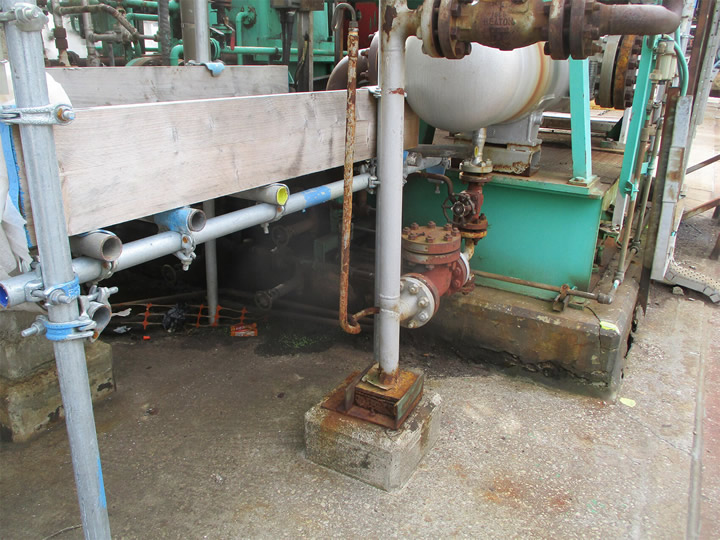
As factories get smarter, they become capable of producing more efficiently, often triggering the need for expansion. This expansion includes better space utilisation, the adoption of newer, larger systems, and an increase in physical footprint.
Records 1 to 15 of 269
Featured Product

Elevate your manufacturing processes with data-driven insights
Join Emerson and discover how embracing a Floor to Cloud™ strategy can revolutionize your operations. This strategy integrates on-site devices and technologies with cloud analytics, providing the insights needed to enhance manufacturing efficiency, maximize workforce potential, and achieve sustainability targets. Our team of experts have a commitment to innovation and look forward to discussing your challenges to develop a customized solution.
Manufacturing and Automation - Featured Company

Teledyne FLIR
Teledyne FLIR designs, develops, manufactures, markets, and distributes technologies that enhance perception and awareness. We bring innovative sensing solutions into daily life through our thermal imaging, visible-light imaging, video analytics, measurement and diagnostic, and advanced threat detection systems. Teledyne FLIR offers a diversified portfolio that serves a number of applications in government & defense, industrial, and commercial markets. Our products help first responders and military personnel protect and save lives, promote efficiency within the trades, and innovate consumer-facing technologies. Teledyne FLIR strives to strengthen public safety and well-being, increase energy and time efficiency, and contribute to healthy and intelligent communities.