
Comprehensive Guide to Composite Materials and Simulation
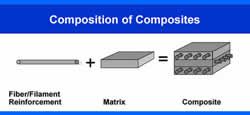
Composite simulation is crucial because it lets engineers explore designs, optimize performance, and spot failures digitally, saving tons of time and money compared to physical testing. It's challenging due to anisotropy, modeling delamination, and high computational cost.
Lack of Automation is Holding Additive Back

Additive Manufacturing (AM) has the potential to rewrite the economics of production. It offers the ability to create more complex geometries and structures than is possible with traditional methods, enables greater efficiencies and performance.
HOW COMPOSITES BENEFIT THE TRANSPORTATION INDUSTRY

With the environmental impact of fuel clear to see, composite materials have the power to drastically reduce unnecessary fuel consumption. This is only one way composites can benefit the transportation industry.
3D Printing of Composites: IDTechEx Profiles Startups Competing for Market Share
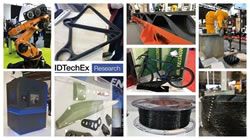
Overall, IDTechEx calculated that this industry received over $100M in investment in 2019. There are very good reasons for both the composite and 3D printing industry to be excited.
Hybrid Composites Help Manufacturers Get the Best of Both Materials
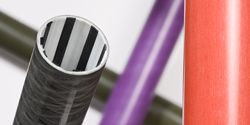
As hybrids boast both a conventional engine and electric battery power, drivers get the best of both worlds. However, many aren't aware that the hybrid concept also extends to composite materials.
The push and pull of composite manufacturing
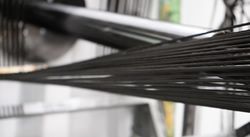
For many manufacturers, the benefits of composite materials are still being discovered. Combining the strength of glass or carbon fiber with the adaptability of a resin system that can be tailor made and cost-efficient to suit your exact technical requirements.
Innovative Technologies In Composite Building Construction
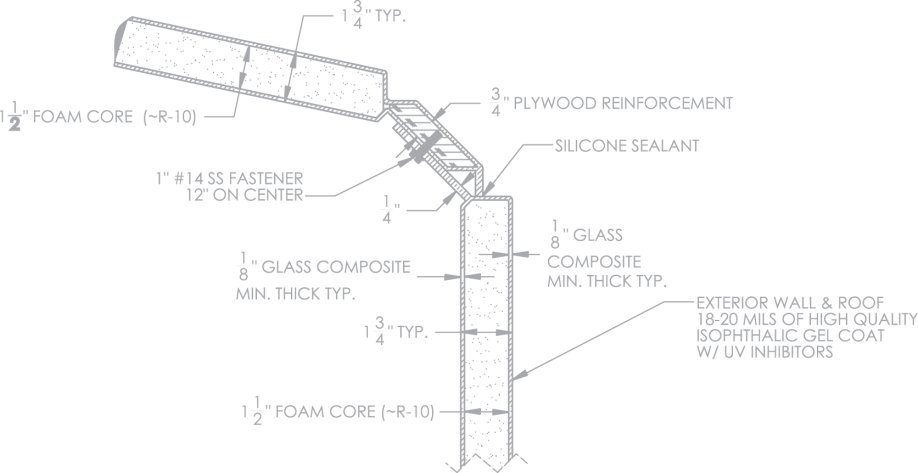
Cutting-edge polymer science and innovative construction methodologies are being leveraged in composite building construction to solve a broad range of issues associated with water treatment processing and other application challenges.
Records 1 to 7 of 7
Featured Product

Cold air to -50°F (-46°C) from your compressed air supply - with no moving parts!
A low cost, reliable, maintenance free solution to a variety of industrial spot cooling problems. Using an ordinary supply of compressed air as a power source, vortex tubes create two streams of air, one hot and one cold, with no moving parts.
Vortex tubes can produce:
"¢ Temperatures from -50° to +260°F (-46° to +127°C)
"¢ Flow rates from 1 to 150 SCFM (28 to 4248 SLPM)
"¢ Refrigeration up to 10,200 Btu/hr. (2571 Kcal/hr.)
Temperatures, flows and refrigeration are adjustable over a wide range using the control valve on the hot end exhaust.
EXAIR Vortex Tubes are constructed of stainless steel. The wear resistance of stainless steel, as well as its resistance to corrosion and oxidation, assures that EXAIR Vortex Tubes will provide years of reliable, maintenance-free operation. https://exair.co/184_530
Manufacturing and Automation - Featured Company

EMERSON
Emerson's industry-leading portfolio enables us to identify and confront the challenges of an increasingly complex and unpredictable marketplace from a position of strength, driving near- and long-term value as a trusted partner for our customers.