
Ex-NASA Engineer Now Guiding Manufacturers to Greater Efficiency

David Altemir, Founder of Altemir Consulting manufacturing consultancy from Dallas, used to build rocket ships. Today, he has his feet firmly planted on the shop floor, helping manufacturers across America improve their operational efficiency.
Why Manual Time Tracking in Business Central Is Costing Your Shop Floor More Than You Think
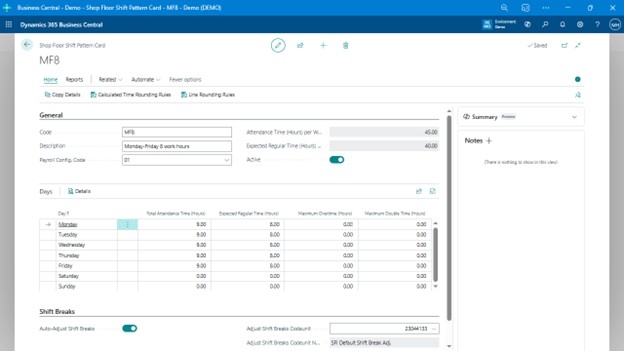
By automating time collection through barcode scanning, manufacturers gain precise labor costing, improved accountability, and a clearer picture of shop floor performance.
AI for Product Data Management: A Key Component for Smarter Manufacturing
.jpg)
AI improves data quality by reducing errors and inconsistencies introduced by manual intervention. Manual errors may not seem like a huge deal, but they can easily disrupt time-to-market or channel accuracy.
Upgrading for Industry 4.0: How Siemens S7-1500 Migration Solves Hidden Legacy Challenges and Why Modern Manufacturing Can't Afford to Wait
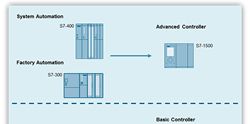
This article explains why migration to the S7-1500 platform is becoming urgent, the hidden challenges engineers face during transition, and how modern PLC architecture supports Industry 4.0 readiness, improved reliability, and long-term performance.
Driving Performance Improvement on the Shop Floor with Production Data

One of my favorite customer lines is, "I need parts, not charts." And that really captures what Datanomix is about: helping manufacturers solve real business problems by clearly showing what's happening on their shop floor.
Rugged Surface Pro xCase with Badge Readers Elevates Workforce Safety & Mustering for Umicore

When global materials technology and recycling leader Umicore set out to modernize employee tracking and emergency mustering processes, they turned to Savance Workplace for a customized digital workforce management solution.
Discovering Manufacturing Bottlenecks Through AI and Machine Learning Analysis
.jpg)
Manufacturing slowdowns come from many sources. That diversity makes it challenging for executives to identify the top causes without help. Well-trained AI and machine learning algorithms can analyze the data and recommend suggestions for improvement.
How private 5G empowers manufacturers to maximize AI use cases

While Wi-Fi networks have historically met the basic wireless connectivity needs of some manufacturing operations, they increasingly fall short in more complex, high-demand industrial environments.
2025 Top Article - Common Misconceptions Manufacturers have about AI

With over 25 years of experience advising mid-market companies, Ghori provides a grounded yet progressive-looking take on where manufacturers should focus, what misconceptions to avoid, and how to get started without overhauling everything.
2025 Top Article - AUTOMATION IS UNLOCKING THE FUTURE OF AM SERVICES
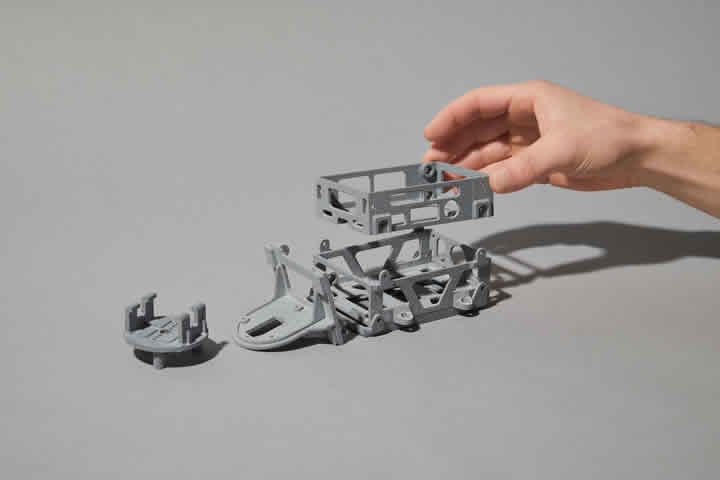
In this article, I want to dive into the role automation plays in the approach to AM services, highlighting the benefits it delivers to customers, how it drives operational efficiency, and why it's essential for the future of this industry.
2025 Top Article - Monitoring Tools for Manufacturing Plant Maintenance
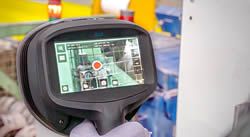
Electrical power delivery systems are usually the most impactful on plant operation. The cost of failure of certain pieces of equipment can quickly escalate into multi-millions of dollars of equipment replacement costs and production downtime.
2025 Top Article - How Industrial 3D Printing is Propelling Small and Mid-Sized Manufacturers Forward
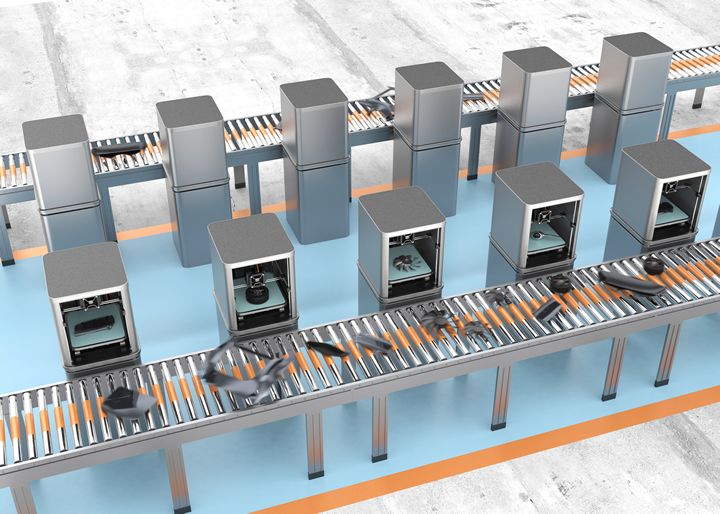
With lower barriers to entry, small and mid-sized manufacturers have more opportunities than ever to integrate industrial 3D printing into their operations while avoiding the hurdles that once held them back.
2025 Top Article - The Rise of AI in Manufacturing to Collect and Use Data

While AI and machine learning systems typically require around two years to collect enough data to reach their full potential, manufacturers can start seeing benefits almost immediately with basic analysis tools and dashboards.
Case Study from Nord - A Heavy Lift

How OMi Crane Systems works with NORD DRIVESYSTEMS to keep manufacturing moving. For OMi Cranes and its customers alike, having a reliable drive system supplier isn't just about convenience, it's about keeping material moving efficiently and without fail.
Why B2B IAM Is Essential for Modern Manufacturing

VPN access is widely used without strong safeguards regarding whether those users should be trusted or what they're entitled to access. Cybercriminals are increasingly targeting VPN setups.
Records 1 to 15 of 2017
Engineering - Featured Product

FLIR Si1-LD - Industrial Acoustic Imaging Camera for Compressed Air Leak Detection
The FLIR Si1-LD is an easy-to-use acoustic imaging camera for locating and quantifying pressurized leaks in compressed air systems. This lightweight, one-handed camera is designed to help maintenance, manufacturing, and engineering professionals identify air leaks faster than with traditional methods. Built with a carefully constructed array of MEMS microphones for high sensitivity, the Si1-LD produces a precise acoustic image that visually displays ultrasonic information, even in loud, industrial environments. The acoustic image is overlaid in real time on a digital image, allowing you to accurately pinpoint the source of the sound, with onboard analytics which quantify the losses being incurred. The Si1-LD features a plugin that enables you to import acoustic images to FLIR Thermal Studio suite for offline editing, analysis, and advanced report creation. Field analysis and reporting can also be done using the FLIR Acoustic Camera Viewer cloud service. Transferring of images can be managed via memory stick or USB data cable. Through a regular maintenance routine, the FLIR Si1-LD can help facilities reduce their environmental impact and save money on utility bills.
Manufacturing and Automation - Featured Company

NORD DRIVESYSTEMS
With four production facilities in the Midwest, on both coasts, and in the South, NORD is prepared to serve you with some of the shortest lead times in the industry. We house extensive component inventory, allowing us to assemble and ship 25% of all standard product orders same or next day!