
With this new 3D printing technique, robots can "practically walk right out of the printer"

Katherine Noyes for Digital Arts:  Imagine you could use a standard 3D printer to create your next robotic assistant. Just snap in a motor and battery, and it's ready to go. That's precisely the scenario made possible by a new 3D printing technique developed at MIT. Liquids have long been a challenge for 3D printing, and they're necessary for hydraulic devices like moving robots. On Wednesday, researchers at MIT’s Computer Science and Artificial Intelligence Laboratory (CSAIL) announced what they call the first-ever technique for 3D printing robots that can print solid and liquid materials at the same time.  Cont'd...

NASA is sending a 3D printer to space that you can use

Emily Calandrelli for TechCrunch:  NASA is preparing to send its first commercial manufacturing facility to the International Space Station (ISS). The 3D printing company Made in Space has partnered with NASA to send their Additive Manufacturing Facility (AMF) to the space station on a launch scheduled to take place next Tuesday. Users on Earth can pay to use AMF, a 3D printer specially designed to operate in a microgravity environment, to print products on the space station. Once it arrives, Made in Space will be able to command AMF remotely from their headquarters in the NASA Ames Research Park. Spencer Pitman, head of product strategy at Made in Space, told TechCrunch that the company has already secured 20 paying customers for AMF. Their customers include high schools that are hosting space-related design challenges, universities that will print medical research components, and companies that will print commercial parts for satellites and other spacecraft.  Cont'd...

3D Printing Reboot

Dana Blankenhorn for SeekingAlpha:  While many people consider 3D printing dead, given what has happened to the stocks of industry leaders such as 3D Systems, Stratasys, ExOne and voxeljet , it's more accurate to say the industry has rebooted and is preparing for another run. This means the industry's excitement is now coming from college campuses and startups. As an investor you want to keep an eye on this, but withhold your investment. Industry leader 3D Systems has been drawing a bid this year as it  undergoes a restructuring, bringing in more professional management, anddropping the Cube, its consumer printer, from the product line. For all of 2015 it reported a loss of $664 million, $5.85/share, on revenues of $666 million. The stock, which once traded as high as $96/share during the last boom, is now at around $13, but it had been as low as $6.42 in mid-January. Founder Charles Hull, 76, has been kicked upstairs to a Chief Technology Officer role.  Cont'd...

Will 3D Printing Be the Demise of Plastic Injection Molding?

When it comes to 3D printing versus injection molding, the best production method for your parts will become clear when you can answer these questions regarding your desired quantity, quality and cost.

America Makes and ANSI Launch Additive Manufacturing Standardization Collaborative

America Makes, the National Additive Manufacturing Innovation Institute, and the American National Standards Institute (ANSI) today announced the launch of the America Makes & ANSI Additive Manufacturing Standardization Collaborative (AMSC). The purpose of the AMSC will be to coordinate and accelerate the development of industry-wide additive manufacturing standards and specifications consistent with stakeholder needs and thereby facilitate the growth of the additive manufacturing industry. Participation is open to any interested person. The catalyst for the AMSC is the fact that a number of standards developing organizations are engaged in standards-setting for various aspects of additive manufacturing, prompting the need for coordination to maintain a consistent, harmonized, and non-contradictory set of additive manufacturing standards. Full Press Release:

4D-Printed Concept Car Will Predict Your Wishes

Viknesh Vijayenthiran for Discovery News:  New materials will also play a significant role in the further evolution of the car, according to BMW. This has already started with the increasing use of carbon fiber and other composites instead of conventional steel. Looking further forward, technologies such as rapid manufacturing and 4-D printing (3D-printed materials that change depending on conditions) will open up new possibilities. One of the more interesting aspects of the concept is a technology called Alive Geometry which consists of 4D-printed components that can change their shape and interact with the driver.  Full Article:

3D Printing - Is this the Next Wave of Technology?

Like a superstrong magnet, 3D printing will pull manufacturing away from the manufacturing hubs and redistribute it, product by product, among thousands or tens of thousands of smaller factories across the globe.

A New Boeing Patent Describes Levitating 3D Printing

By Lindsey Kratochwill for Popular Science:  Watching a 3D printer work can sometimes seem like magic--thin filaments slowly build up on top of a platform, turning into parts and figurines. Now, apatent published by aerospace company Boeing introduces an even more futuristic element: levitation. With this method, the object prints while floating in midair thanks to magnets or acoustic waves. A "nugget" or base gets printed first out into space, and then a cadre of 3D printers add more and more of the printing material. But why? Levitation is cool, yes, but it turns out there is also a practical purpose for a floating 3D printed object, at least according to Boeing's patent. The levitating object can be manipulated and turned more so than an object stuck to a platform can be, and using many printheads at the same time would ostensibly speed up the process.  Cont'd...

Samsung to provide 'smart factory' solution in South Korea

Cho Mu-hyun for ZDNet:  Samsung Electronics will provide its smart factory solution for over a thousand small and medium-sized businesses in South Korea by 2017, the company announced. The South Korean tech giant will first provide the solution to 224 firms selected by the Center for Creative Economy & Innovation (CCEI), a state-run startup and small businesses accelerator program, starting this month. The CCEI has centres nationwide and works with almost all South Korean conglomerates to fund and support small enterprises with potential. Samsung will provide these firms with manufacturing execution systems and enterprise resource planning solutions. It will also provide its IT-based manufacturing solutions such as automated manufacturing, process 3D simulations, and CAD/CAM super-precision moulding machines. The firm plans to provide 450 companies with the solutions this year and over 1,000 by next year.  Cont'd...

NASA, Made in Space think big with Archinaut, a robotic 3D printing demo bound for ISS

Debra Werner for Space News: Within five years, companies could begin in-orbit manufacturing and assembly of communications satellite reflectors or other large structures, according to Made in Space, the Silicon Valley startup that sent the first 3D printer to the International Space Station in 2014. As Made in Space prepares to send a second 3D printer into orbit, the company is beginning work with Northrop Grumman and Oceaneering Space Systems on Archinaut, an ambitious effort to build a 3D printer equipped with a robotic arm that the team plans to install in an external space station pod, under a two-year, $20 million NASA contract. The project will culminate in 2018 with an on-orbit demonstration of Archinauts ability to additively manufacture and assemble a large, complex structure, said Andrew Rush, Made in Space president. NASAs selected the Archinaut project, officially known as Versatile In-Space Robotic Precision Manufacturing and Assembly System, as part of its Tipping Points campaign, which funds demonstrations of space-related technologies on the verge of offering significant payoffs for government and commercial applications. Archinaut was one of three projects NASA selected in November that focus on robotic manufacturing and assembly of spacecraft and structures in orbit. Cont'd...

Innovation in Creation: Demand Rises While Prices Drop for 3D Printing Machines

Declining 3D printer prices will prompt innovations at a faster rate in downstream markets, making customization the new norm for a wide variety of products.

Buildings Manufactured From A 3D Printer

With the flexibility of construction, 3D buildings will allow architects to dream up all sorts of extraordinary edifices that would be too difficult or too expensive to build, using traditional methods. A 3D-printed building would not need to coincide with our traditional ideas of what a building looks like.

3D printing software, sensors, and carbon nanotubes among top Advanced Materials trends of 2016

By Kira for 3ders.org:  The first month of 2016 is now behind us, and the year is shaping up to be particularly interesting in terms of 3D printing trends. In the advanced materials sector specifically, emerging technologies firmLux Research has predicted that the top three ‘undercover’ advanced materials trends of 2016 include improved 3D printing software and formats, Carbon nanotube products, and IoT devices embedded with sensing materials.  Cont'd...

Is Velo3D Plotting a 3-D Printed Robot Revolution?

Tekla S. Perry for IEEE Spectrum:  Velo3D, based in Santa Clara, Calif., has $22.1 million in venture investment to do something in 3-D printing: That makes it fourth among 2015’s best-funded stealth-mode tech companies in the United States, according to CB Insights. This dollar number is about all the hard news that has come out of this startup, founded in 2014 by Benyamin Butler and Erel Milshtein. But job postings, talks at conferences, and other breadcrumbs left along Velo3D's development trail—has created a sketchy outline of this company’s plans. Consider which 3-D printing technology is ready for disruption: metal. 3-D printing of plastics took off after 2009, when a key patent that covered the deposition technology expired; we now have desktop printers for 3-D plastic objects as cheap as $350. Printing of metal objects—done regularly in industry, particularly aerospace—uses a different, and, to date, far more expensive technology: selective laser sintering. This technology melts metal powders into solid shapes; it requires high temperatures, and far more complicated equipment than what’s found in the layering sort of printers used for plastic. The patent for this technology expired in early 2014—just before the formation of Velo3D. At the time, industry experts indicated that there wouldn’t be cheap metal printers coming anytime soon, but rather, would only come after “a significant breakthrough on the materials side,” OpenSLS’s Andreas Bastian told GigaOm in 2014. Could Velo3D’s founders have that breakthrough figured out?  Cont'd...

Volvo Construction Equipment Digs Up Prototype Savings Of 18 Weeks And 92% Of Costs

Since 3D printing the prototype cost $770 and took only two weeks, including both design and development, VCE completed its testing much sooner than traditional methods would have allowed.

Records 631 to 645 of 789

First | Previous | Next | Last

Additive & 3D Printing - Featured Product
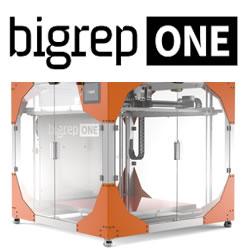
BigRep ONE: Large-Scale 3D Printing

BigRep ONE: Large-Scale 3D Printing

The BigRep ONE is an award-winning, large-format 3D printer at an accessible price point. With over 350 systems installed worldwide, it's a trusted solution for prototyping and production by designers, innovators, and manufacturers alike. Featuring a massive one-cubic-meter build volume, the fast and reliable ONE brings your designs to life in full scale.

Manufacturing and Automation - Featured Company

EXAIR

EXAIR

EXAIR intelligent compressed air® products solve problems in industrial plants while reducing compressed air consumption and increasing safety for personnel. We have the largest variety of sizes, materials and performance characteristics in order to provide the best solution for your processes and problems. Our products are commonly used to conserve air, cool processes or parts, convey material, clean surfaces or coat surfaces. EXAIR's 15 extensive product lines include air knives, air wipes, air nozzles and jets, atomizing nozzles, static eliminators, cold gun air coolant systems, air amplifiers, safety air guns, air operated conveyors, industrial housekeeping products, vortex tubes and spot cooling products, cabinet cooler systems, vacuum generators, compressed air optimization products, and associated accessories. Products meet OSHA standards and are CE and RoHS compliant. Five-year warranty on compressed air products and one-year warranty on accessories and electrically powered products.