
How To Find Preferred Machining Service
Find a provider that can deliver high-quality custom parts that meet specific needs and requirements is important.
Identify Your Needs:
Research And Compare Providers:
Once you have identified your needs, research and compare different machining service providers. You can start by searching online for providers in your area or industry. Look for providers that have experience in your industry and specialize in the type of parts you need. You can also ask for recommendations from colleagues or industry associations.
When evaluating potential providers, consider the following:
Experience and Expertise: Look for providers that have a proven track record of delivering high-quality parts and have a team of experienced engineers and technicians who can provide customized solutions to meet your needs.
Facilities and Equipment: Check if the provider has the necessary facilities and equipment to handle your project. Look for providers that have modern, well-maintained equipment and facilities.
Quality Control Measures: Quality control is crucial in the machining industry to ensure that the parts produced meet the required specifications and standards. Look for providers that have a comprehensive quality control process in place and are certified to ISO 9001 or other relevant standards.
Customer Service: Look for providers that are responsive to your inquiries and provide regular updates on the status of your project. A provider that is easy to communicate with and provides excellent customer service will help ensure a smooth and successful project.
Read reviews and testimonials from previous customers to get an idea of the quality of their work and their level of customer service.
Request Quotes:
Once you have identified a few potential providers, request quotes from each of them. Be sure to provide detailed information about your needs and requirements to ensure that you receive an accurate quote. You should also ask for a timeline for the project, including lead times for production and delivery. Compare the quotes and the level of service provided by each provider to determine which one offers the best value for your money.
Consider Experience And Expertise:
When choosing a machining service provider, experience and expertise are crucial. Look for providers that have a track record of delivering high-quality parts and have experience in your industry. They should also have a team of experienced engineers and technicians who can provide customized solutions to meet your needs.
Evaluate Quality Control Measures:
Quality control is essential in the machining industry to ensure that the parts produced meet the required specifications and standards. When evaluating potential providers, ask about their quality control measures and certifications. Look for providers that have a comprehensive quality control process in place and are certified to ISO 9001 or other relevant standards.
Communication And Customer Service:
Finally, consider the level of communication and customer service provided by the machining service provider. Look for providers that are responsive to your inquiries and provide regular updates on the status of your project. They should also be willing to answer any questions or concerns you may have. A provider that is easy to communicate with and provides excellent customer service will help ensure a smooth and successful project.
In summary, finding a preferred machining service involves identifying your needs, researching and comparing providers, requesting quotes, evaluating experience and expertise, considering quality control measures, and assessing communication and customer service. By following these tips, you can find a provider that can deliver high-quality custom parts that meet your specific needs and requirements.
Featured Product
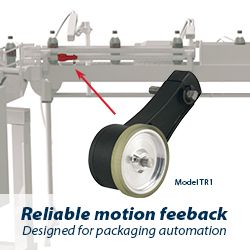
Model TR1 Tru-Trac
The Model TR1 Tru-Trac® linear measurement solution is a versatile option for tracking velocity, position, or distance over a wide variety of surfaces. An integrated encoder, measuring wheel, and spring-loaded torsion arm in one, compact unit, the Model TR1 is easy to install. The spring-loaded torsion arm offers adjustable torsion load, allowing the Model TR1 to be mounted in almost any orientation - even upside-down. The threaded shaft on the pivot axis is field reversible, providing mounting access from either side. With operating speeds up to 3000 feet per minute, a wide variety of configuration options - including multiple wheel material options - and a housing made from a durable, conductive composite material that minimizes static buildup, the Model TR1 Tru-Trac® is the ideal solution for countless applications.