
For the packaging industry specifically — with its heavy reliance on document processing, planning logic, and throughput efficiency — the year proved one thing: AI is no longer a future advantage. It's a current competitive requirement.
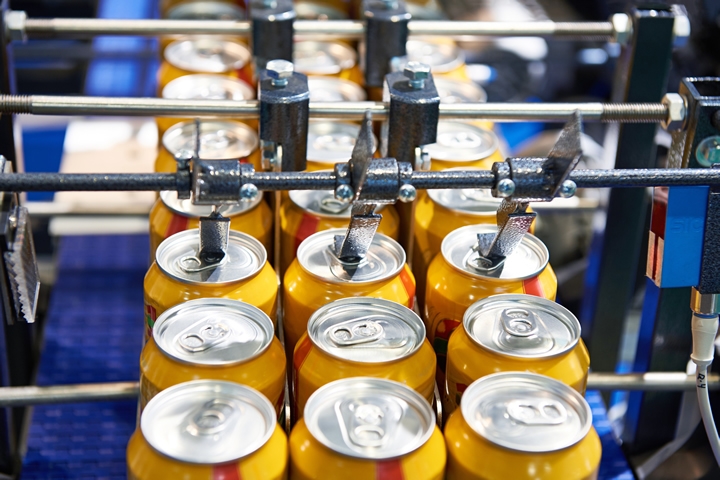
The Rise of the Invisible Workforce: The Most Important AI Breakthroughs of 2025 for Packaging Manufacturers

Article from | HiFlow Solutions

INTRODUCTION

Packaging plants entered 2025 under intense strain — shrinking labor pools, rising short-run pressure, and too little intelligent automation to keep up. Inventory accuracy from raw to WIP to finished goods became harder to maintain. The question is: how long can manufacturers rely on manual workflows for problems that now demand automation?

That’s when a new force stepped in — an invisible workforce powered by AI, quietly taking on the tasks humans no longer have the hours or capacity to manage.

Multiple global studies in 2025 confirmed what packaging leaders were already feeling on the plant floor: AI had shifted from novelty to infrastructure. According to McKinsey’s State of AI 2025, 88% of companies adopted AI in at least one workflow. KPMG reported that 96% of manufacturers deploying AI saw measurable efficiency gains. And Deloitte found 29% of manufacturing facilities implemented AI at the plant level in 2025.

For the packaging industry specifically — with its heavy reliance on document processing, planning logic, and throughput efficiency — the year proved one thing: AI is no longer a future advantage. It’s a current competitive requirement.


2025 STATS THAT MATTER

  • 88%: Companies using AI in at least one business function (McKinsey, 2025)
  • 96%: Manufacturers reporting measurable efficiency gains with AI (KPMG, 2025)
  • 29%: Manufacturing facilities with AI/ML on the floor (Deloitte, 2025)
  • 79%: Brand owners report increasing SKUs (NAPCO Research, 2025)
  • 15 to 45 minutes → 10 seconds: Manual PO entry vs. AI PO processing
 
“2025 wasn’t the year AI became interesting — it was the year AI became essential.”
 

2025’s Most Important Insight

If there is one defining realization for packaging executives this year, it’s this: AI finally works reliably in the areas where packaging operations struggle most. The following upstream workflows—long overlooked—are now the biggest opportunity for competitive advantage.
  • Estimating
  • Procurement
  • Supplier management
  • Logistics
  • Traceability
  • Accounts payable
 

The Bigger Picture of AI -  AI Amplifies Human Expertise

2025 didn’t just introduce new AI features — it reshaped how packaging companies think about work itself. Across folding carton, labels, and flexible packaging, a clear truth emerged: AI isn’t replacing people. It’s replacing the tasks people no longer have the capacity to do.

With labor shortages at historic levels, SKU counts rising, supply chains fluctuating, and customer expectations accelerating, plants discovered that many of their most time-intensive processes were never designed for today’s volume and complexity. For many converters, the shift to AI unlocked significant capacity with the same number of employees.  AI stepped in not as a replacement for skilled teams, but as a force multiplier.

This new division of labor formed the central lesson of 2025: AI takes manual work off your plate so your people can operate at the level of their expertise.

Where people excel:

  • Knowledge of industry, company
  • Understanding customer relationships
  • Evaluating decisions
  • Troubleshooting and problem solving
  • Creative thinking, nuanced contexts
  • Judgement of situations & tradeoffs
  • Strategic thinking, exception handling
  • Quality oversight and judgement

Where AI excels:

  • Reading and interpreting documents
  • Structuring unstructured data
  • Pattern recognition across thousands of orders
  • Automating repetitive tasks
  • Routing workflows and approvals
  • Detecting errors and anomalies
  • Performing real-time PO/BOL/invoice matching


THE FIVE AI BREAKTHROUGHS THAT DEFINED PACKAGING IN 2025

1. AI Estimating: From Hours to Seconds

For decades, estimating has been one of the most overloaded and under-automated functions in packaging manufacturing. Estimator retirements accelerated in 2025, leaving converters scrambling for capacity as SKUs skyrocketed. AI became the critical relief valve.
What once took hours — or required a senior estimator — can now occur in seconds.
AI doesn't replace estimators; it gives them superpowers. It handles the repetitive, pattern-based work so humans can focus on strategy, pricing, and customer engagement.
New AI estimating systems now:
• Interpret incoming quote requests
• Extract specs, materials, and run requirements
• Identify optimal production paths
• Flag missing details and request clarification
• Build accurate costing
• Produce complete, visualized production workflows
Why 2025 mattered:
AI models trained on packaging-specific data became accurate enough to trust. Modern systems learned not just what to estimate, but how converters actually think about make-ready time, tooling, layout, waste, and line sequencing.
What this means for 2026:
AI estimating will become the single biggest differentiator in response speed and win rate.


2. AI Purchase Order Processing: Eliminating Manual Entry

If 2024 was the year supply chains stayed unpredictable, 2025 was the year converters realized how much time — and accuracy — they were losing to manual PO entry. Manual entry turns into a 10-second automation.
AI PO processing now:
• Reads PDFs, emails, spreadsheets, scanned documents, or EDI
• Extracts full line-item data
• Validates against material masters
• Flags discrepancies
• Creates records in ERP automatically
• Routes exceptions intelligently
Why this mattered in 2025:
Supply chain disruptions forced converters to process more, smaller, more urgent POs—often with inconsistent formats from hundreds of suppliers.
2026 implication:
PO automation will become standard, not optional; converters still doing manual entry will lose days of productivity per month.


3. AI Supplier Price List Management: Always Accurate, Always Current

2025 marked the year AI finally became capable of reading complex supplier price lists — one of the quietest but most transformational breakthroughs in procurement automation. For converters, pricing accuracy is everything. Outdated spreadsheets and manual updates create hidden margin losses. AI fixed this.
Systems with AI now:
• Parse complex PDFs and spreadsheets
• Identify grades, GSM, coatings, widths, weights
• Match materials to internal codes
• Update ERP costing and purchasing databases
• Maintain historical records
• Flag anomalies
Why 2025 was the breakthrough:
Deep-learning OCR and NLP became accurate enough to handle highly variable supplier formats.
What this means for 2026:
Pricing precision becomes a strategic weapon — and AI is how companies maintain it.
 

4. AI Supplier Delivery Processing: Real-Time Inbound Logistics

Inbound logistics has always been one of the least-automated steps in packaging operations. Delivery documents, ASNs, manifests, and mixed pallets — along with the need to correctly track raw materials, WIP, and finished goods — have all remained messy, inconsistent, and time-consuming.
AI delivery processing now:
• Reads ASNs, manifests, and supplier emails
• Extracts quantities and material details
• Validates against open POs
• Updates inventory automatically
• Flags mismatches instantly
Why this mattered in 2025:
Converters finally saw the operational cost of inaccurate inbound data — especially with substrate volatility and tight schedules.
What this means for 2026:
Plants will move toward fully connected scheduling tied to real-time AI inventory accuracy.
 

5. AI BOL Processing & Accounts Payable: The New Foundation of Traceability

BOLs and invoices — the most painful documents in packaging — got their AI revolution in 2025. Accounts Payable AI closes the loop by validating invoices and updating financial records instantly.
AI can now:
• Read scanned, handwritten, multi-page BOLs
• Split batch files into individual BOLs
• Extract shipment data
• Match to POs and deliveries
• Route exceptions
• Perform three-way matching automatically
What mattered in 2025:
BOLs have always been the last mile of documentation chaos. AI finally tamed them.
What it means for 2026:
Financial automation becomes essential for audit readiness, fraud detection, and cash-flow visibility.
 

EXECUTIVE INSIGHT: WHAT 2025 PROVED ABOUT AI IN PACKAGING

Packaging operations entered 2025 already stretched — too many jobs, too many SKUs, too many documents, and not enough specialists to manage them. AI became the stabilizing force.
AI lifted the administrative weight so teams could operate at their highest value. Many converters gained significant capacity — without additional hiring — by automating the workflows that consumed the most hours: estimating, procurement, logistics, traceability, and accounts payable.
In 2025, leading CEOs stopped asking, “Can AI do this task?” They started asking, “Where can AI give us leverage and yield the most ROI?” Executives no longer viewed AI as experimental software — they saw it as the system that can keep the plant moving even when labor is tight, orders surge, or suppliers falter.
The next step? Work with a trusted, family-owned tech company that can help you put AI to work as your invisible workforce. With the right tech partner, you’ll know exactly where AI can deliver rapid ROI and immediate impact. Companies that embrace this partnership will lead the industry in 2026.
 

CONCLUSION

2025 proved that AI in packaging is no longer experimental — it’s operational, practical, and transformative.  After years of speculation and cautious pilot projects, artificial intelligence finally became accurate, stable, and industry-specific enough to meaningfully automate real production workflows. What emerged wasn’t just better software, but an invisible workforce operating behind the scenes: AI systems reading documents, processing orders, validating shipments, and matching invoices at a speed and scale no human team could sustain. 
The research is clear: plants that deployed AI in upstream workflows in 2025 saw consistent improvements—creating faster, more reliable workflows end to end. 

For packaging manufacturers, AI isn’t tomorrow’s advantage. It’s today’s invisible workforce — and the competitive requirement for every plant fighting to stay ahead.

Needing some guidance for what will give your organization the best ROI from AI? Contact us at HiFlow.

 
The content & opinions in this article are the author’s and do not necessarily represent the views of ManufacturingTomorrow

Featured Product

NVIDIA RTX PROâ„¢ BLACKWELL DESKTOP GPUs N

NVIDIA RTX PRO™ BLACKWELL DESKTOP GPUs N

NVIDIA RTX PRO™ - Built for Professionals - NVIDIA RTX PRO Blackwell Desktop GPUs feature the latest breakthroughs in AI, ray tracing, and neural rendering technology to power the most innovative workflows in design, engineering, and beyond.