
How Aerospace Precision Can Modernize American Manufacturing
Whether in the sky or on the shop floor, Verma believes the principle remains the same. “When you combine disciplined engineering with intelligent data,” he says, “you give American manufacturing the tools to lead again.”
For Ishu Verma, an award-winning aerospace engineer and AI systems researcher, the future of American manufacturing begins with a mindset shift. Drawing on his experience in aviation, digital engineering, and federally regulated safety frameworks, he believes the discipline that governs aerospace can serve as a blueprint for revitalizing the nation's industrial base.
"In aerospace, every component is designed, tracked, and verified with absolute precision," Verma explains. "Data is not a byproduct; it is a critical asset. When manufacturers adopt that mindset, they can predict outcomes, prevent waste, and reach levels of quality that historically only aerospace demanded."
Verma's career spans advanced structural design, FAA certification programs, and AI-driven predictive maintenance at Eclipse Aerospace, where he leads major modernization initiatives. His work focuses on integrating digital engineering, analytics, and automation to strengthen the safety and reliability of North American aircraft systems. He sees direct parallels between these efforts and the challenges facing U S manufacturers today.
One of the biggest obstacles to modernization, he notes, is cultural rather than technical. "The main barriers are organizational silos," he says. "Design, production, and IT often operate separately, and without shared data, digital transformation stalls." Companies frequently invest in new tools but underinvest in the trust, training, and collaboration required to make those tools effective. "Buying technology is not enough," Verma adds. "You have to give people the confidence to use it."
That confidence becomes powerful once data is connected across the full product lifecycle. Verma emphasizes that real time visibility transforms both quality and safety. "When you can see how and why deviations occur, you can address problems before they turn into defects," he says. Predictive analytics and digital records support accountability and traceability, mirroring aerospace's approach to airworthiness. "Safety is built into every decision," he explains. "If manufacturers link design data to shop floor performance, they can prevent errors instead of reacting to them."
Automation and AI, far from replacing workers, can strengthen the American workforce when implemented with purpose. "Automation removes the repetitive and high risk tasks," Verma says. "It gives people the space to focus on creativity and problem solving." He notes that aerospace offers a clear example. "Automation made aviation safer and more consistent, but human judgment remained essential. Machines execute, but people innovate."
Digital twin technology is another area where aerospace experience can inform broader manufacturing adoption. Virtual models allow engineers to test, stress, and refine products before production begins. "A digital twin creates an unbroken feedback loop between design and reality," Verma says. "You can predict wear, identify flaws, and optimize maintenance long before physical production. That makes operations both faster and more reliable."
For smaller manufacturers, the path forward does not require the resources of an aerospace giant. "Start small, but start smart," he advises. "Even a few strategically placed sensors can generate valuable insights." Cloud technology now enables smaller firms to scale gradually without heavy upfront investment. Collaboration with universities, regional innovation hubs, and incubators can also reduce barriers. "The goal is not perfection on day one," Verma says. "It is progress through visibility."
On the policy front, Verma believes national strategy must treat digital infrastructure as seriously as physical infrastructure. "We need strong incentives for cybersecurity, standardization, and workforce retraining," he says. Public-private partnerships can accelerate adoption for small and midsize firms, while national standards ensure that data systems remain interoperable. "The focus should be on people, process, and platforms," he says. "In that order."
Looking ahead, Verma sees digital engineering reshaping what it means to be a skilled worker in America. "Tomorrow's manufacturing professionals will combine hands-on skill with data literacy," he says. "Understanding a machine's mechanics will matter as much as interpreting its analytics." The result is a workforce where every role becomes smarter. "It is not just the ability to build something," he emphasizes. "It is the ability to understand the data that keeps it performing at its best."
Verma's work across aerospace, AI systems, UAV research, and sustainability continues to influence how engineering disciplines converge. His contributions to the AIAA International Strategy and Implementation Committee support global collaboration on next-generation aviation systems. His research, published in IEEE conferences, has shaped thinking on AI-enabled precision agriculture and dual-use technologies that advance both economic and climate resilience.
Whether in the sky or on the shop floor, Verma believes the principle remains the same. "When you combine disciplined engineering with intelligent data," he says, "you give American manufacturing the tools to lead again."
Featured Product
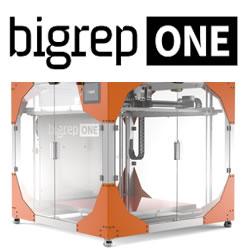
BigRep ONE: Large-Scale 3D Printing
The BigRep ONE is an award-winning, large-format 3D printer at an accessible price point. With over 350 systems installed worldwide, it's a trusted solution for prototyping and production by designers, innovators, and manufacturers alike. Featuring a massive one-cubic-meter build volume, the fast and reliable ONE brings your designs to life in full scale.