
Modernizing Manufacturing Physical Security With Agentic AI
With Operational Technology (OT), production workflows, assembly lines, robotics, and more, securing today’s manufacturing environments requires intelligent systems that can interpret context, prioritize real threats, and act autonomously at scale to ensure safety. The stakes are high: theft, supply chain vulnerabilities, and potentially hazardous working conditions all threaten the security of both people and places.
By Shikhar Shrestha, CEO and Co-Founder, Ambient.ai
Employee safety and facility security are the backbone of manufacturing. But upholding physical security at a manufacturing site-which can span hundreds of thousands of acres and employ hundreds of workers-is a complex mission.
With Operational Technology (OT), production workflows, assembly lines, robotics, and more, securing today's manufacturing environments requires intelligent systems that can interpret context, prioritize real threats, and act autonomously at scale to ensure safety. The stakes are high: theft, supply chain vulnerabilities, and potentially hazardous working conditions all threaten the security of both people and places.
Manufacturers modernize day-to-day operations in order to remain competitive, deploying new technologies to expand services, unlock revenue opportunities, differentiate from competitors, and strengthen customer loyalty. But the drive to modernize doesn't always reach critical infrastructure like physical security.
Fragmented, Outdated Systems Threaten Production, People, and Intellectual Property
Physical security teams must defend intricate and multifaceted environments, but fragmented technology, rigid processes, and outdated solutions lead to systems that are passive by design, expensive to operate, and largely ineffective at preventing incidents.
Top challenges guards and officers must grapple with include:
• Reactive processes: Companies invest in guards, cameras, and alarms as insurance against the worst-case scenario, but manual, stagnant processes make security a reactive cost center instead of a proactive strategic asset. Enterprises deploy thousands of cameras, but the vast majority of video feeds go unwatched. Post-incident monitoring has rendered most camera infrastructure passive—and in turn ineffective at preventing security incidents.
• Data overload: Security Operations Center (SOC) operators are expected to monitor hundreds of video feeds, validate millions of access control signals each year, and investigate every alert in real time. Existing tools like Video Management System (VMS) and Physical Access Control System (PACS) were never designed for this volume or velocity. They require manual workflows, high operator headcount, and constant oversight.
• Fragmented tools: Video platforms, access controls, analytics tools, and manual tracking rarely integrate smoothly. The result is wasted effort, alert fatigue, and ballooning costs, all without materially improving safety. What's more, siloed point solutions address symptoms, not root causes.
These challenges jeopardize worker safety, production schedules, supply chain, and more.
Leveraging AI Drives Better Outcomes
A new approach to enterprise physical security, agentic physical security, leverages reasoning vision-language models to analyze video, access and sensor data with human-like understanding - but at machine speed. This advanced technology helps physical security teams drive better outcomes through enhanced detection accuracy, accelerated security response times, and an overall improved security posture across manufacturing sites.
• Enhance visibility into threats throughout vast sites: AI systems can analyze video feeds 24/7 to detect threat behaviors like active threats, suspicious activity, insider threats, and behavioral anomalies. In manufacturing, continuous analysis can also spot safety violations, equipment tampering, and intrusions that threaten production continuity, allowing teams to intervene before incidents cause costly downtime.
• Reduce false positives through accurate monitoring and alerting: Agentic physical security applies patented real-time computer vision to access control events, eliminating the need for manual review. It verifies what's happening at the door, reduces false alarms by over 90%, and enables scalable, autonomous perimeter protection—saving millions in staffing, dispatches, and incident response. In one case, leveraging AI for physical security resulted in a 96% reduction in total dispatches.
• Respond faster with real-time situational awareness: AI-powered physical security platforms automate alert escalation and empower mobile security teams with instant visual context. Guards receive video before responding, while SOC teams track activity and resolution in real time. During low-traffic hours, a single patrol guard can operate as both responder and SOC, reducing overhead without sacrificing coverage.
By embracing a new operational model—one where AI-powered systems act as intelligent agents augmenting human operators—security leaders achieve better outcomes protecting manufacturing facilities.
Agentic Physical Security Sets New Security Standards
Reasoning AI purpose-built for physical security closes gaps left by static systems, transforming physical security from passive surveillance to proactive prevention and enabling security leaders to reprioritize their security staff on more impactful and urgent activities. On manufacturing floors, this means shifting personnel from routine surveillance and manual gate checks to supervising automated responses, coordinating with operations and maintenance teams, and focusing on incidents that could halt production or endanger workers.
The synergy of AI-driven technology and the rapid response of the organization's security personnel are key to ensuring the safety of people, places, and property.
Hybrid Workforce That Works with More Accountable, Measurable Security Operations
As factories modernize, the role of the security guard is also evolving. The future is not automation replacing people. It is automation supporting them.
In an augmented guard model:
• AI detects and triages
• Humans intervene and resolve
• Robots and drones support verification when needed
This division of labor enables guards to focus on tasks that require presence, judgment and communication—while AI handles the cognitive workload.
GSOC performance has been measured by volume-driven and compliance-based metrics (e.g., number of alarms processed, number of patrols completed). These measures do not capture the impact of AI-augmented workflows, where technology enables faster triage, higher report quality, and better SOP adherence. A new KPI and SLA framework will have to adopted, including by not limited to:
• Time to triage critical events
• Accuracy and completeness of incident documentation
• SOP compliance
• Quality of shift handoffs
• Response alignment with risk level
For manufacturers that operate globally or across multiple sites, consistent KPIs create a foundation for stronger governance and predictable outcomes.
Protecting People, Production and IP
Manufacturers that adopt agentic physical security gain advantages that extend far beyond traditional safety:
• Reduced downtime from faster incident response
• Stronger protection against IP theft
• More consistent safety enforcement
• Improved insurance and compliance posture
• Lower long-term operating costs
As the industry continues to automate production, it must also modernize how it protects that automation.
The Bottom Line
Manufacturing cannot rely on reactive security systems in an environment defined by speed, scale and complexity. Agentic physical security—AI systems that perceive, understand and act with human oversight—offers a path toward safer operations, stronger continuity and better protection of workers and assets.
Featured Product
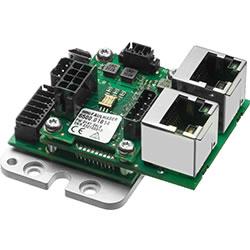
MOTION CONTROLLERS FOR MINIATURE DRIVES AND MICRODRIVES
FAULHABER has added another extremely compact Motion Controller without housing to its product range. The new Motion Controller is ideal for integration in equipment manufacturing and medical technology applications. With 36 V and 3 A (peak current 9 A), it covers the power range up to approx. 100 W and is suitable for DC-motors with encoder, brushless drives or linear motors.