Ready, aim, hire! Why attracting fresh talent to manufacturing is vital to the industry’s long-term success
Thanks to economic globalisation, as well as significant progress in increasing productivity, the manufacturing industry has experienced dramatic change over the past few decades. To stay globally competitive, it has transformed itself through rapidly improving technologies, innovative production processes, implementation of lean manufacturing principles and multi-skilling. “Disrupt or be disrupted” is now the oft-used motto, as ground-breaking business models and breakthrough technologies are used to shape company fortunes.
This transformation has led to a new manufacturing paradigm that, regardless of the industry, has seen many manufacturers typically require workers with an expanded skill set. Such a rapid evolution can often lead to a disparity between the skills needed in today’s production environments and the abilities of an existing workforce. A further challenge for manufacturers, and in the case of my own company, one of our largest issues, is how to attract new young talent to an industry that’s often perceived to be uninteresting.
Getting smart
While specialised internal re-training can often help solve the first issue, securing the workforce of tomorrow is a heavier lift. The increasingly smart-connected, automated environments in which we operate see the human element play an even more central role, as long as it has the skills to lead the transition toward industry 4.0 practices and the industrialisation of the workshop. The career opportunities in such advanced, progressive companies are as plentiful as they are interesting. But despite this, the message still fails to reach many of today’s pre-work generation, and – in some cases – even their parents and educators in schools. Personally, I believe we’re experiencing a hangover from a previous age, when the working environments within manufacturing were considered outdated, inadequate and uninspiring.
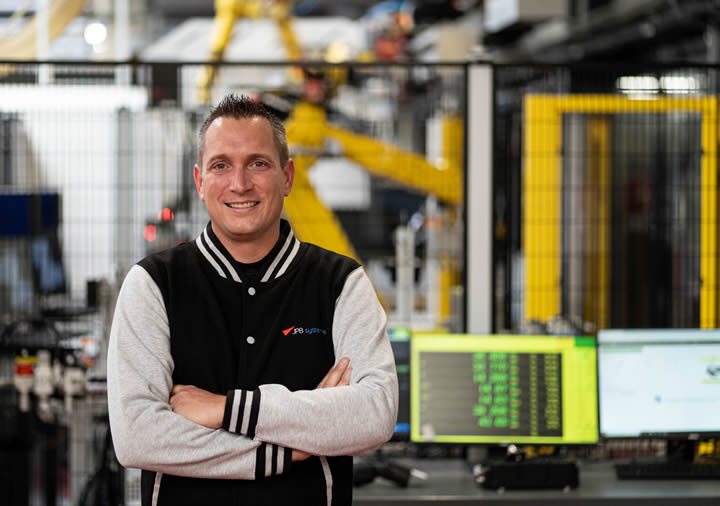
As a company owner, I feel obligated to connect with the younger generation and demonstrate to them that today’s manufacturing environments are more likely to embrace Industry 4.0 and – among others – exciting technologies like 3D printing, robotics and the industrial internet of things that typically underpin the concept.
Securing tomorrow’s workforce, today
I’m sure JPB Système is not alone in sometimes struggling to find skilled, motivated production line operatives, but we certainly do our best to explore ways of alleviating the problem. I therefore visit schools and universities, or arrange visits to our facility, to raise interest and inspire students. In addition, we work closely with undergraduate engineering institutions and second-chance schools to offer internship opportunities.
Nevertheless, there is still a long way to go. I believe that as an industry, we should think bigger, together and more long term. To achieve that, our company is now exploring ways to expand the conversation and highlight the manufacturing transformation taking place as a result of the Industry 4.0 revolution. Indeed, our company will shortly host a meeting of teachers and other educators, as well as representatives from industry associations and political institutions to ensure that today’s young people at least consider a career in this dynamic and ever-changing industry. This can only help to enable its future success.
Featured Product