
Vacuum Soldering Ovens: A Quality Inspector’s View on SMT Excellence
Vacuum soldering ovens deliver precision and reliability for SMT challenges. Explore how I.C.T's PCB assembly solutions can optimize your line.
As a quality inspector in an SMT facility, my role is to catch defects before they reach the client. Vacuum soldering ovens have become a cornerstone in ensuring the high-quality solder joints our customers demand. Unlike traditional reflow ovens, vacuum soldering tackles persistent issues like voids and inconsistent wetting, delivering reliable results for complex PCBs. Here's how it works and why it matters for SMT professionals.
Addressing Common SMT Pain Points
High-density boards, like those for 5G modules or automotive sensors, often suffer from voids-air pockets that weaken solder joints. In one batch, we saw void rates hit 20%, leading to rejects and rework delays. Vacuum soldering ovens solve this by creating a low-pressure environment (10-100 mbar) that removes trapped gases, reducing voids to under 2%. Our facility saw a 15% yield increase and a 25% reduction in rework time after adopting an I.C.T vacuum soldering oven. For procurement managers, this translates to cost savings; for engineers, it means fewer defects to troubleshoot.
The Process Under the Hood
The vacuum soldering process is meticulous. PCBs, prepped with SnAgCu solder paste and components, enter the oven. Preheating (150-180°C) activates flux and prevents thermal shock. The vacuum phase removes air, ensuring strong solder wetting during reflow at 245-260°C. Controlled cooling (2-4°C/second) solidifies joints without stress. I.C.T's ovens, with multi-zone heating and real-time sensors, make this process reliable. An engineer on our line, Lisa, said, "The data logging helps me verify every joint meets spec-it's a game-changer for inspections."
Real-World Results
In a recent project for aerospace avionics, we needed void-free joints to meet MIL-STD standards. The I.C.T vacuum oven delivered, cutting voids by 90% and improving yield by 20%. A client remarked, "Your boards passed our thermal cycling tests with zero failures." In consumer electronics, vacuum soldering supports fine-pitch components in IoT devices, ensuring compact designs perform reliably. These results showcase why I.C.T's SMT equipment is trusted globally.
Why It Matters for SMT Teams
For quality inspectors like me, vacuum soldering means cleaner X-ray and AOI results, simplifying defect detection. Engineers benefit from precise control over temperature and vacuum, reducing issues like tombstoning. Procurement managers see the ROI through lower rework costs and higher yields-our facility recovered the oven's cost in 18 months. I.C.T's energy-efficient designs (15% less energy) and seamless SMT line integration make it a practical choice for scaling production.
Take the Next Step
Vacuum soldering ovens deliver precision and reliability for SMT challenges. Explore how I.C.T's PCB assembly solutions can optimize your line-contact smt@smt11.com today.
Featured Product
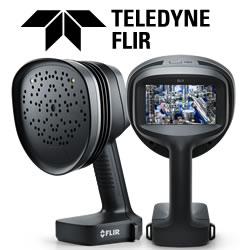
FLIR Si1-LD - Industrial Acoustic Imaging Camera for Compressed Air Leak Detection
The FLIR Si1-LD is an easy-to-use acoustic imaging camera for locating and quantifying pressurized leaks in compressed air systems. This lightweight, one-handed camera is designed to help maintenance, manufacturing, and engineering professionals identify air leaks faster than with traditional methods. Built with a carefully constructed array of MEMS microphones for high sensitivity, the Si1-LD produces a precise acoustic image that visually displays ultrasonic information, even in loud, industrial environments. The acoustic image is overlaid in real time on a digital image, allowing you to accurately pinpoint the source of the sound, with onboard analytics which quantify the losses being incurred. The Si1-LD features a plugin that enables you to import acoustic images to FLIR Thermal Studio suite for offline editing, analysis, and advanced report creation. Field analysis and reporting can also be done using the FLIR Acoustic Camera Viewer cloud service. Transferring of images can be managed via memory stick or USB data cable. Through a regular maintenance routine, the FLIR Si1-LD can help facilities reduce their environmental impact and save money on utility bills.