
Wagner Logistics Expands Warehouse Management into Portland, Now Features 7 Million Square Feet of Total US Distribution Space
Wagner Logistics provides finished goods overflow solutions for Modlo
Leading warehousing and logistics management provider in the U.S. Wagner Logistics (Wagner) announced the expansion of its distribution space into Portland, Ore., which increases its total U.S. distribution space to more than 7 million square feet across 24 markets. Wagner's latest warehouse includes 82,556 square feet of dedicated distribution space and the potential to convert it into a multi-customer facility, with automation potential.
Headquartered in Kansas City, Mo., Wagner worked with Newmark Zimmer, one of the top commercial real estate firms in the Midwest, to secure the warehouse lease for the Portland space that is serving as a key distribution point for supply chain overflow of finished household goods for customer Bridge Industrial/Modlo.
"From handling lightbulbs to ten-thousand pound rolls of paper, Wagner's warehouse and management expansion into more U.S. cities is evidence that our trained and experienced team is safely handling a variety of products successfully at lower costs and at faster work rates," said Brian Smith, president and CEO, Wagner Logistics. "Finding and securing the one available warehouse space in the market to serve as an overflow facility for our client is testament that our team consistently has a finger on the pulse of the industry and is committed to solving distribution challenges using a lean manufacturing team, the accompanying innovative equipment and automation."
Efficient distribution needs are increasing as global economic uncertainty persists, therefore Wagner is taking warehouse cost optimization to the next level using the strategy of sharing facilities, personnel and equipment to service the storage and distribution needs of multiple manufacturers or shippers. Incorporating automation and robotic lifts and other equipment in dock areas for example, also preserves human bodies and decreases safety risks.
"We specialize in efficient warehousing and logistics management for companies that make non-hazmat products," said Smith. "Instead of their teams focusing on where and how to store and transport their products, we take on that responsibility so they can continue producing their products and running their businesses."
Wagner employs more than 550 team members across major cities including Kansas City; Indianapolis; Dallas; Cleveland; Milwaukee; Jacksonville, Fla.; Charlotte; Los Angeles, Stockton and Tracy, Calif.; and Detroit. As the team grows, exceptional customer service and employee morale remain top priorities for Wagner, as evidenced in the attainment of the company's latest warehouse, which includes bike storage for employees and is in close proximity to many employees' homes.
Featured Product
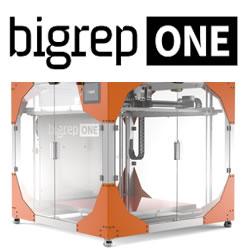
BigRep ONE: Large-Scale 3D Printing
The BigRep ONE is an award-winning, large-format 3D printer at an accessible price point. With over 350 systems installed worldwide, it's a trusted solution for prototyping and production by designers, innovators, and manufacturers alike. Featuring a massive one-cubic-meter build volume, the fast and reliable ONE brings your designs to life in full scale.