
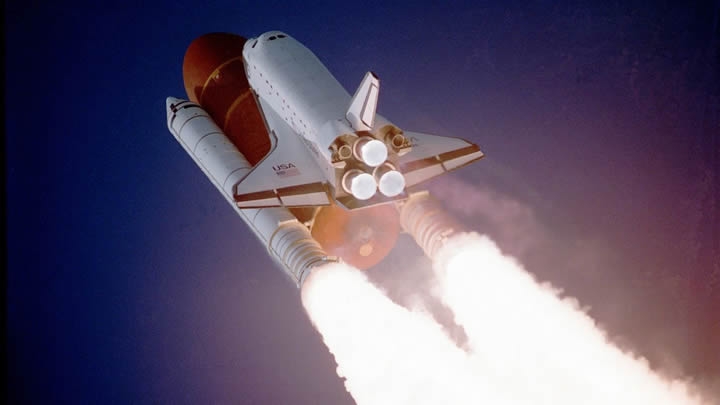
David Altemir, Founder of Altemir Consulting manufacturing consultancy from Dallas, used to build rocket ships. Today, he has his feet firmly planted on the shop floor, helping manufacturers across America improve their operational efficiency.
 Ex-NASA Engineer Now Guiding Manufacturers to Greater Efficiency
Case Study from | MRPeasy
Putting together NASA’s ERP requirements
Altemir Consulting was founded in 2017 by David Altemir, a former materials engineer and project manager at NASA who later worked in operations management and senior executive roles in commercial aerospace and defense companies and the medical device industry.
One of his many tasks at NASA involved putting together the requirements for the agency’s ERP system. This kickstarted David’s passion for business management systems and paved the way to spearheading implementation projects at future companies.
“After NASA, I was the leader of ERP implementations in all the subsequent companies I worked at,” he says.
Manufacturers need help navigating the ERP landscape
7 years ago, David decided that consulting other businesses would be the best outlet for his expertise. Today, he works with manufacturers of various industries throughout North America, mainly in the US. The sizes of the businesses he services range from pre-revenue startups to those turning over billions annually.
“I think our biggest client so far, a chemical company, made $26 billion a year,” he states. “Most of our clients range between $5-100 million, though.”
Often, businesses turn to Altemir Consulting to solve performance issues without considering ERP systems. Many of their clients, however, either need help finding and implementing a suitable software solution or optimizing their current one. Another subset of clients needs help optimizing their existing system, mostly in terms of inventory accuracy. According to David, the main cause of the issue is not the software but rather a lack of transactional discipline or bad data inputs.
“I can’t think of a single instance where it was the software that was to blame for inaccurate inventory records,” he says.
One solution stands out in the SME market
Since starting the consultancy, a significant portion of Altemir Consulting’s work has involved implementing and optimizing MRPeasy, particularly for small to mid-sized discrete manufacturing companies.
“There are many solutions out there that look nice and are essentially good systems,” he says, “but MRPeasy’s capabilities are quite unique when it comes to the needs of SME manufacturers.”
David emphasizes MRPeasy's actual costing capability, which is much more useful than the standard costing other solutions offer. While standard costing uses estimated costs for production, actual costing records real costs incurred during the manufacturing process.
“Actual costing is particularly important for smaller companies that are ramping up production as they need to have a good understanding of their unit costs,” he says. “It gives a terrific advantage to many businesses.”
Another functionality MRPeasy stands out with is traceability. Having a complete overview of a product's journey is vital for manufacturers in heavily regulated industries such as food, pharma, aerospace, and many others.
“Along with the software's usability and low price, these functionalities make MRPeasy attractive for SMEs,” David says.
MRPeasy also lends itself to companies that frequently update their product design. Without a clear system for managing engineering changes, transferring design updates to production can lead to delays and costly errors. Additionally, without a revision control system, companies rarely know which BOM version they are currently working with, making inventory and purchasing highly inaccurate.
“Often, companies don’t take managing BOM versions seriously,” David says, “and this kills their efficiency.”
David has also worked with companies that need a simple way to manage customization options—a requirement solved by MRPeasy’s matrix BOM functionality.
“I recently consulted a roofing material manufacturer that offers its products in different colors and styles,” he says. “Setting up the configurable BOM functionality for them was challenging initially but made their jobs so much easier.”
Average project takes 3 months and $12-25k
Although many of MRPeasy’s clients implement the system independently, the software provider has a network of authorized consultants like David who help those with more intricate needs. With David, implementing MRPeasy usually takes around 3 months and $12,000-$25,000, which contrasts with other systems that could swallow years and hundreds of thousands of dollars. To ensure customer confidence, David offers additional support after going live.
“As of yet, none of my clients have needed any extra assistance,” he states.
So far, David has helped around 30 manufacturers implement or optimize MRPeasy and is looking forward to guiding more American manufacturers to modernization and growth.
The content & opinions in this article are the author’s and do not necessarily represent the views of ManufacturingTomorrow

MRPeasy
MRPeasy is a seriously powerful and easy to use ERP software for small manufacturers that gives you everything you need to manage your manufacturing and distribution processes. Integrating sales, procurement, inventory, production, finances, and your team, it provides you with an accurate real-time overview of your operations. MRPeasy is trusted by 2000+ small manufacturers worldwide, 700+ of which are based in the US and Canada. Our users report a 54% average improvement in the overall performance of their business and a 42% increase in on-time deliveries. Try for free, no credit card needed.


Other Articles
Organic Soda Producer Implements Traceability System in Just a Few Weeks
Natural Cleaner Manufacturer Cuts Delivery Times with Smarter Planning
Precision Engineer Manages Business on His Phone After Software Adoption
More about MRPeasy
Featured Product