
Prompt Engineering for the Plant, Not the Marketing Department
By Donald McArthur, Chief AI Officer & Service Manager, Real IT Solutions
Search "prompt engineering," and you'll get marketing blogs, content calendars, and a lot of advice about writing catchier ad copy. That's not wrong, exactly — it's just aimed at the wrong audience. In my work helping manufacturers and industrial businesses adopt AI, the highest-stakes prompts I see aren't creative at all. They're technical. A maintenance tech summarizing a work order. A quality engineer drafting a non-conformance report. A scheduler explaining a production change to a customer who's already nervous about a delivery date.
Nobody wrote a framework for that. So most people just type the way they'd text a coworker, hit enter, and hope. Then they spend twenty minutes fixing what came back.
In the manufacturers I work with, the pattern is consistent: the tool isn't the problem. The model is more than capable of producing a clean, accurate work order or a defensible quality record. What's missing is structure on the way in. Readers of this publication have been hearing a lot lately about where industrial AI stalls — brittle integrations between machines and the governance gap around letting agents act autonomously on the floor. Those are real problems, and they're being worked on by people smarter than me on the OT side. But there's a much more immediate gap sitting one layer up, in the office: the humans who are already using ChatGPT or Copilot every day to write the documents that keep a plant running, with no shared method for how to ask for what they need.
Why a Generic Prompt Fails on a Technical Document
In marketing, a mediocre AI-drafted paragraph gets edited or thrown out. Low stakes. In a plant, a mediocre AI-drafted document often becomes the record. A quality non-conformance report that speculates about root cause instead of stating only what was verified can complicate a customer complaint or an audit. A maintenance ticket that flattens shorthand notes into something that sounds clean but loses the actual fault code is worse than the messy original. A supplier update that drops a contractual qualifier — "delayed, but within terms" becomes just "delayed" — can trigger a conversation nobody needed to have.
That's not the AI failing to understand manufacturing. It's the same five-word prompt — "clean this up," "write this up," "let the customer know" — used for a marketing caption and a quality record. The fix isn't a better tool. It's a better ask.
The CRAFTED Framework
I put together a structure I call CRAFTED to teach prompt engineering in half-day workshops for professional teams. It's seven components, and the idea is that you can run through it in under a minute before you type anything into an AI tool:
? Context — What's actually going on? The relevant facts, constraints, or background the AI can't guess.
? Role — Who should the AI act as? A quality engineer writing for an audit trail responds differently than a generalist assistant.
? Audience — Who reads this? A next-shift technician, a customer's procurement contact, and a company president all need something different from the same underlying facts.
? Format — What structure does the output need? A form with specific fields, a short paragraph, a table.
? Tone — Factual and neutral, or reassuring but honest, or terse.
? Explain — Tell the AI to flag what it's unsure about rather than guessing. This one matters more in technical writing than anywhere else.
? Deliverable — The specific, finished thing you want back — not "some information about this," but the actual document.
It's a checklist, not a script you have to write out in full every time. Once a team internalizes it, most of these become habit. But writing it out the first several times is what breaks the "clean this up" reflex.
CRAFTED in Practice
Here's what it looks like against three document types that come up constantly in manufacturing environments I've worked with — production scheduling, quality documentation, and maintenance summaries.
Turning a raw maintenance note into a usable work order. A technician's shorthand notes — half-finished sentences, abbreviations only the day shift understands — get pasted into an AI tool with a prompt like "clean this up." The result often reads well and is quietly wrong, because the model resolved an ambiguous abbreviation with a confident guess instead of a flag.
A CRAFTED version sets the role as a maintenance supervisor preparing a handoff, the audience as the next shift and the parts desk, the format as a structured work order with clear fields (asset, symptom, action taken, parts needed, follow-up), and — critically — the explain instruction: flag anything ambiguous instead of resolving it silently. The output takes the same raw notes and produces a document the next shift can act on, with genuine gaps marked instead of papered over. Fewer clarifying calls to the floor, safer handoffs.
Writing a quality non-conformance report that holds up. "Write up this defect" tends to produce something that reads confidently but drifts into speculation — assigning a probable cause the AI wasn't actually given evidence for. In a document that may support a customer response or an ISO 9001 audit trail, that's a liability, not a convenience.
Here the role is a quality engineer documenting for an audit record, the tone is strictly factual — no root-cause speculation unless it's confirmed — and the deliverable is the specific NCR fields your quality system already uses. What comes back is something a QA manager can sign off on without a rewrite. The difference isn't polish. It's that the document only says what's actually known.
Communicating a schedule slip to a customer. "Tell the customer the order is late" is a fast way to send an email that either overpromises a new date or undersells that the delay is still within contract terms. This time the audience is the customer's procurement contact, not an internal update; the context includes root cause, contract terms, and a realistic new date; and the tone stays professional without over-promising. The message comes out consistent no matter which member of the team is drafting it that day.
In all three cases, the underlying facts were exactly the same. The only thing that changed was how clearly the request was framed before the AI ever started generating.
This Isn't Just a Productivity Tip
Framing this purely as a time-saver undersells it — it's also a risk-reduction move. A vague prompt doesn't just produce weaker writing; it produces output nobody double-checks, because it sounds confident. Structured prompting doesn't replace the person who knows the process well enough to verify the result before it becomes a record. It makes that verification faster, because the output is consistent and the gaps are labeled instead of hidden.
There's a quieter benefit here too, worth naming for anyone following the AI governance conversation on the floor-automation side right now. Teams working from a shared framework are less likely to paste proprietary specs or customer data into a consumer AI tool without thinking about what's appropriate to share — because "Context" and "Audience" are now questions they're already asking themselves.
Starting This Week
You don't need new tooling or a vendor evaluation to try this. Pick one document type your team produces constantly — maintenance tickets, non-conformance reports, or supplier updates are all good candidates — and build one CRAFTED-structured prompt template for it. Have the team use that template instead of freeform prompting for two weeks and compare what comes back. This is a training and process change, not a technology purchase, and it tends to be the fastest credibility win for teams that are otherwise skeptical of AI in a technical environment.
The tools already on your floor and in your office are more capable than most of the documents they produce. The gap isn't intelligence. It's how clearly we're asking.
Donald McArthur is Chief AI Officer and Service Manager at Real IT Solutions, a managed IT and AI advisory firm based in Grand Rapids, Michigan, where he created the CRAFTED prompt engineering framework.
Featured Product
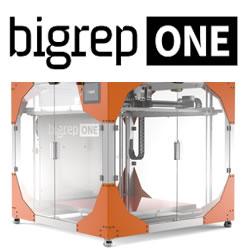
BigRep ONE: Large-Scale 3D Printing
The BigRep ONE is an award-winning, large-format 3D printer at an accessible price point. With over 350 systems installed worldwide, it's a trusted solution for prototyping and production by designers, innovators, and manufacturers alike. Featuring a massive one-cubic-meter build volume, the fast and reliable ONE brings your designs to life in full scale.